


Project at a glance
- Problem
- Event visitors needed a way to explore project information through physical interaction rather than a linear presentation.
- My role
- Experience design, physical interaction, component prototyping and exploration of materials and manufacturing methods.
- Team
- Victor Kato, Caio Santos, Rebecca Bortolami, Michelle Musafir, Lucas Cruz and Cauê Melo.
- Period
- 2022.
- Outcome
- An interactive table combining physical tokens, a touch display and a software application.
Interactive Table for Displaying Information at In-Person Events
Experience Table combined physical objects and digital content to let visitors explore information at in-person events. The design challenge was to make the objects, touch surface and software work as one experience.
Physical Features:
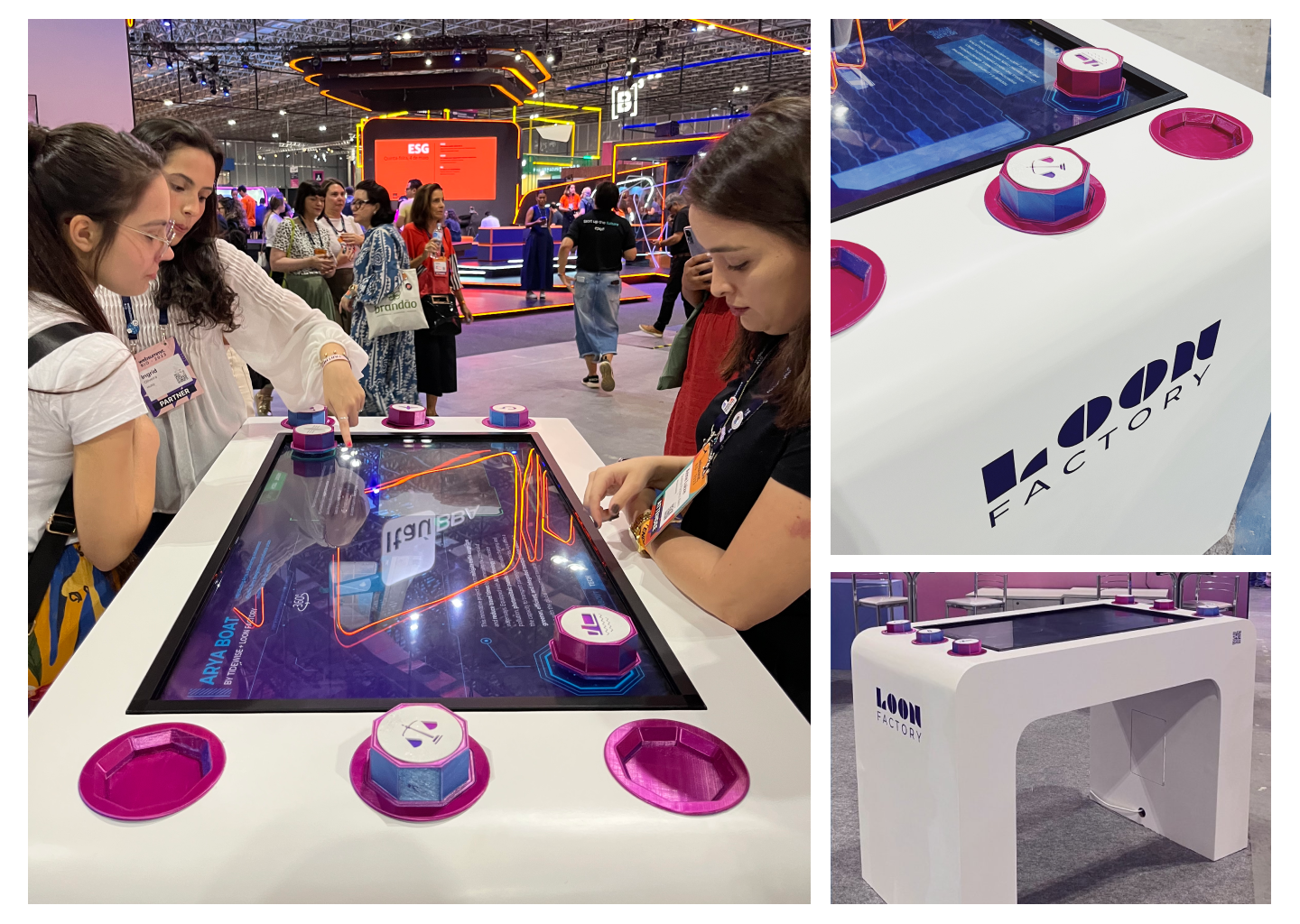
The table measured approximately 1.4 × 0.7 × 1.2 metres and used a wood structure with a white lacquer finish. A 49-inch display, touch frame and laptop formed the digital setup.
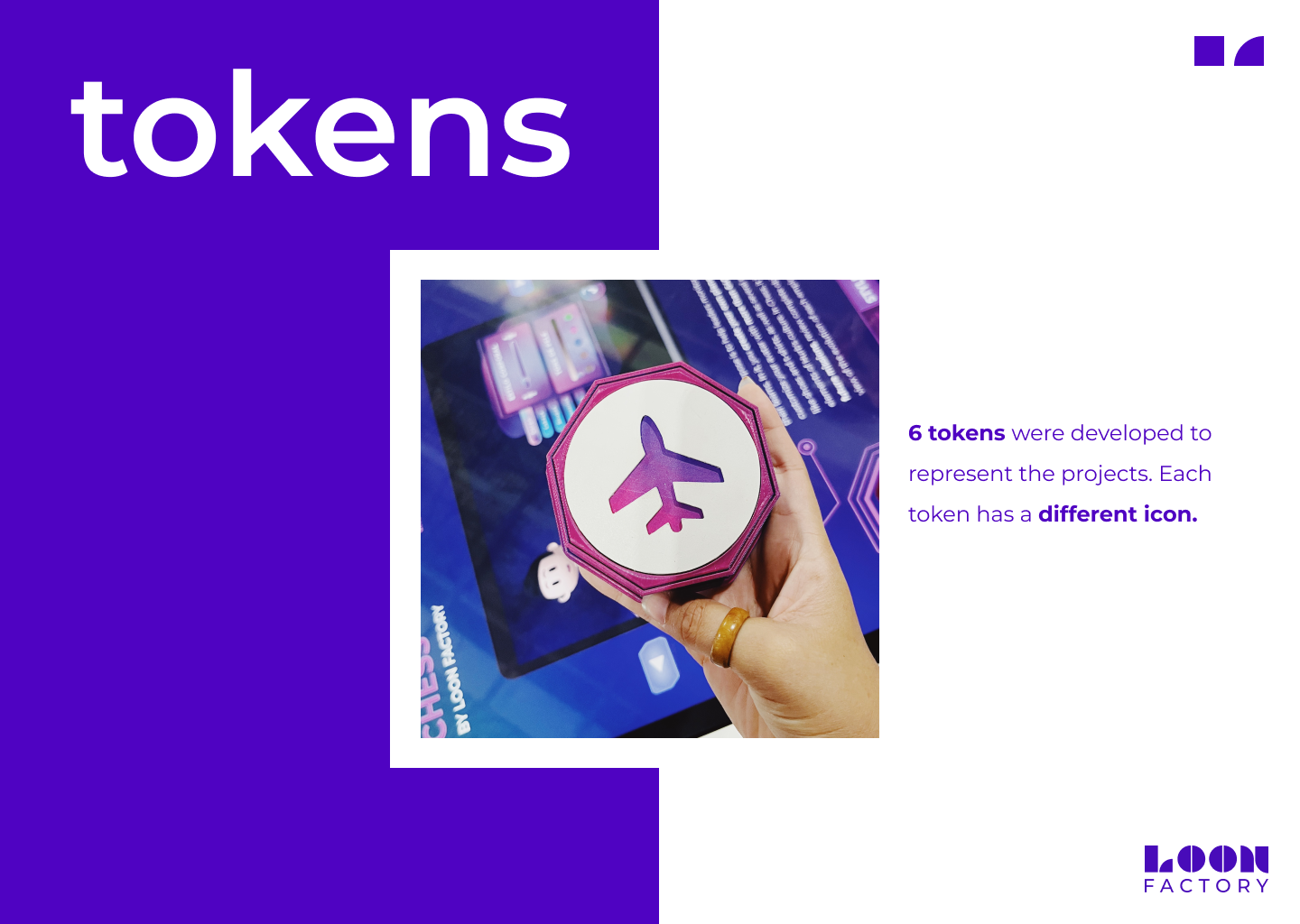
We changed the tokens from round to hexagonal to limit rotation and make placement more intuitive. Each token included a 100-gram metal weight to improve handling and contact with the table. Magnetic tops allowed the icons to be changed, while matching 3D-printed pieces helped position the tokens.
Operation:
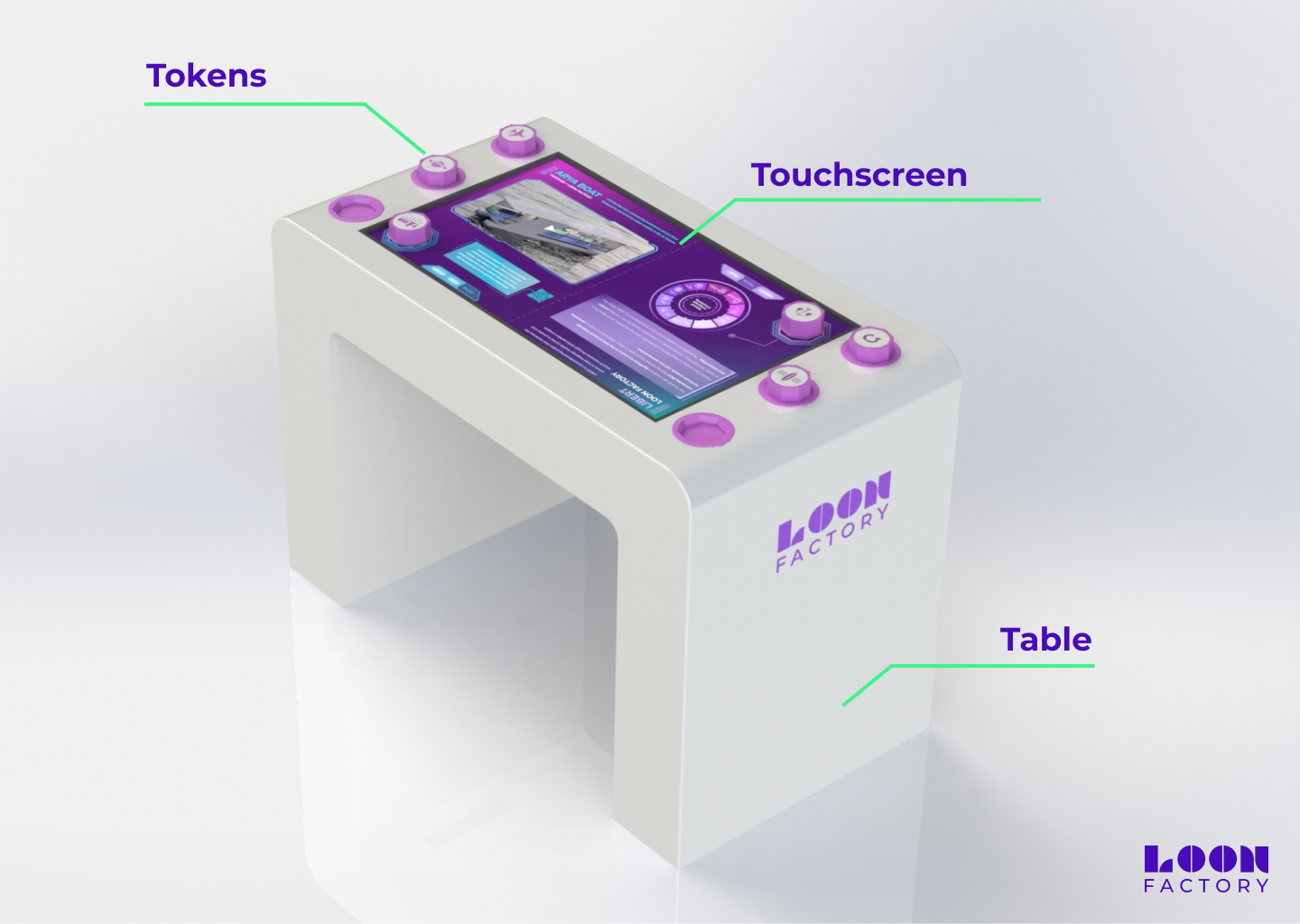
Each token had a distinct geometry at its base. The touch system recognized that geometry and displayed the corresponding information. This approach drew inspiration from an existing tangible-interaction platform.
Advantages and Benefits:
Visitors could select information by handling objects instead of following a fixed slideshow. This made the physical interaction part of navigating the content.
Innovation and Technology:
The tokens were 3D printed, and the application was built with Godot, an open-source game engine. It ran on a laptop housed inside the table and connected to the touch display.
Adaptability and Ease of Use:
Interchangeable token tops allowed the content and icons to change for different projects. Physical and digital components had to remain coordinated for each configuration.
Target Market:
The concept was designed for companies presenting projects and products at events. Tourism information was another potential application.
Materials and implementation
The physical prototype brought materials, fabrication, handling and electronics into the same design process. The case does not include a formal safety or environmental-impact assessment.
Conclusion:
The resulting table demonstrates the integration of industrial design, tangible interaction and software. The key design decisions concerned how visitors would handle objects and how those objects would reliably connect to digital content.